- How is the knee joint structured?
- What happens in cases of knee osteoarthritis?
- What conservative treatment options are available for knee osteoarthritis?
How is the knee joint structured?
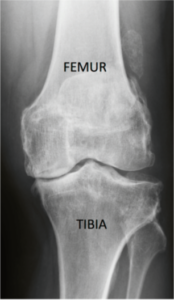
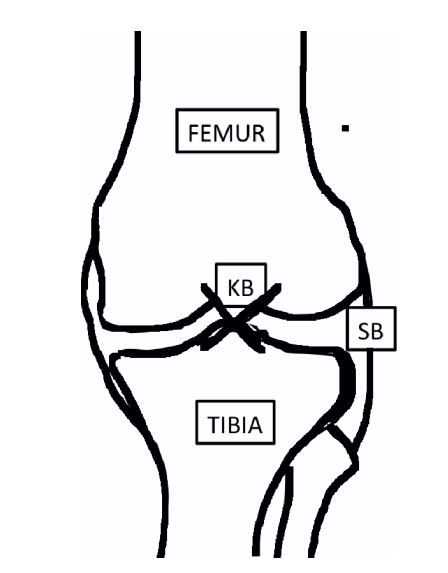
The knee joint works similarly to a hinge, consisting of the thigh bone (femur), the shin bone (tibia) and the kneecap (patella), each of which is covered with cartilage on the joint surface. The smaller calf bone (fibula) is not directly involved in the joint surfaces, but is the attachment point of the lateral collateral ligament (Fig. 1).
We differentiate three joint components where osteoarthritis can develop. The focus here is on the articulation between the tibia and the femur (tibiofemoral articulation) and articulation between the femur and the inner surface of the kneecap (patellofemoral joint).
In addition to the main functions of flexion and extension, rotational and gliding movements also occur between the thigh and lower leg. To compensate for the incongruent joint surfaces of the thighbone and shinbone, there is a crescent-shaped fibrocartilage disc (meniscus) on both the outer and inner sides, acting as a buffer between the cartilage-covered ends of the bones. The kneecap (patella) acts as a large stabilising fulcrum (hypomochlion), that allows adequate extension and flexion movement.
The stability of the knee joint is ensured by a complex ligamentous system consisting of the lateral and medial collateral ligaments, as well as the anterior and posterior cruciate ligaments. The knee joint itself is enclosed in a dual-layer joint capsule; the inner capsule produces synovial fluid, while the outer capsule stabilizes the joint. The synovial fluid nourishes the articular cartilage and reduces friction. Any damage to one or more of the structures of the knee joint can lead to joint degeneration, known as ‘osteoarthritis’.
What happens in cases of knee osteoarthritis?
Injuries to the joint caused by accidents, as well as long-term excessive or incorrect strain, can result in damage to the cartilage surface and progressive joint degeneration (osteoarthritis). Physicians refer to osteoarthritis of the knee as ‘gonarthrosis’. The human body is unable to replace the loss of cartilage. Angular deformaties (Fig. 2) lead to rapid progression of the disorder.
This results in inflammation of the synovial membrane, which then produces excessive amounts of synovial fluid, leading to knee effusion. Tension in the joint capsule causes increased discomfort and pain; this is referred to as “activated osteoarthritis”.
In the final stages of osteoarthritis, there may be a total loss of cartilage, leading to misalignment, impaired motion and, ultimately, stiffness of the knee joint. The initial pain on weight-bearing, is increasingly accompanied by pain at rest.
Osteoarthritis is typically characterized by “start-up pain”: in the morning after getting up or after sitting for a long time, the first few steps are difficult as the joint seems to be “rusted in place”.
What conservative treatment options are available for knee osteoarthritis of the knee?
It is not possible to heal osteoarthritis using conservative treatment methods such as medication, physical therapy or joint-preserving surgical procedures; however, surgery can often be avoided or the need for surgery postponed. Treatment is tailored to the cause and severity of the osteoarthritis (stage). In the early stages, muscle strengthening helps to relieve the burden on the affected knee joint, possibly guided by physiotherapy. Furthermore, pain medication, orthopaedic insoles and reducing the physical strain of daily life and work are recommended.
The cause of the degenerative process should be identified at an early stage so that any necessary joint-preserving surgical corrections, such as realignment of the leg or cartilage replacement, can still be carried out in good time.
To combat the irritation of the synovial membrane and thus the pain, anti-inflammatory or pain-relieving medication may be taken temporarily, or cortisone injections may be administered into the joint. In recent years, injection therapies using hyaluronic acid preparations in joints damaged by osteoarthritis have been developed as a further treatment option. Hyaluronic acid, a component of synovial fluid, acts as a lubricant, a ‘shock absorber’ and inhibits inflammation. Its effectiveness has been evaluated differently in various studies to date, meaning that health insurance usually does not cover the costs.
The situation is similar with so-called ‘chondroprotectives’ (glucosamine and chondroitin sulphate), which are available in tablet and powder form. They are said to have a protective effect on joint cartilage, but definitive proof of their long-term effectiveness is still lacking. In cases of increasing pain and insufficient pain relief from non-surgical and joint-preserving treatments, the decision to proceed with joint replacement may be appropriate.
Text: With the kind support of Dr Kathi Thiele (Charité Berlin)
- What components make up a knee replacement?
- How long does an artificial knee joint last these days?
- What do the terms ‘cemented’ and ‘cementless’ mean in knee replacement surgery?
- How is knee replacement surgery performed?
If conservative treatment approaches fail, surgical intervention should be considered. Here are a few comments on this:
What components make up a knee replacement?
Depending on the type and severity of the condition, the doctor must select the best possible solution and treatment for the patient from the various types of implants available. A knee replacement typically consists of the following components:
- Metal or ceramic tibial component (shin cover)
- Metal or ceramic femoral component (thigh cover)
- Plastic insert (inlay) to replace the joint space
In rare cases, the back surface of the knee cap is replaced with an additional plastic disc.
The most commonly used material is a cast cobalt-chromium alloy for the femoral and tibial implant components. The inlays are usually made from UHMWPE (ultra-high molecular weight polyethylene) or, increasingly, from highly cross-linked polyethylene (HXLPE). The polyethylene (PE) used in prosthetics is a specially hardened plastic that exhibits low friction and thus less wear or deformation when interacting with other joint components.
Depending on the extent of bone destruction or ligament damage, the surgeon can choose between prosthesis designs with different ‘degrees of coupling’. The greater the coupling between the tibial and femoral components, the more the natural anatomical guidance of the knee joint is replaced by mechanical coupling. A distinction is made here between uncoupled prostheses (Fig. 3) and coupled prostheses (Fig. 4). If only half the joint surface is replaced, this is referred to as a sled prosthesis (= unicondylar prosthesis). A fundamental prerequisite for this is that all ligamentous structures are intact. The bicondylar endoprosthesis replaces the outer and inner femoral condyles and the entire articular surface of the tibial head. It is the most commonly used type, as osteoarthritis usually affects all parts of the joint. In cases of severe ligament damage (particularly the posterior cruciate ligament), a special inlay (‘posteriorly stabilised’) or a partially coupled prosthesis may be necessary.
If there are already severe signs of wear, with damage to the ligaments and joint instability, partially coupled implants are used. The partial coupling of the femoral and tibial components ensures a stable joint play even in such cases.
Fully axis-guided implants (hinge joints) are used when the ligament stability of the joint is insufficient. They are also frequently used in revision surgery.
How long does an artificial knee joint last these days?
The lifespan of knee replacements depends, among other things, on the following factors:
- Age at the time of the first operation
- Duration and intensity of use
- Anatomy of the joint (malalignment)
- Cause of joint wear
- Metabolic bone diseases
- Quality of implantation
- Abrasion caused by the release of particles from the prosthesis
For this reason, the lifespan of knee prostheses cannot be calculated precisely. Data from international patient registries demonstrate very good long-term function of knee prostheses. Eight out of ten knee prostheses today have a lifespan of at least 25 years (1,2).
What do ‘cemented’ and ‘cementless’ mean in knee replacement surgery?
In a cemented knee replacement, a load-bearing bond between the implant and the bone is created using a biocompatible synthetic resin cement. This allows the knee to bear weight soon after the operation.
With a cementless knee replacement, the contact between the bone and the implant is established solely by the shape of the implant (design, surface). The surgeon optimises the fit of the implant by preparing the bone, thereby ensuring its long-term durability. However, the bone still needs to grow into or onto the surface of the prosthesis after the operation, which is why the treating doctor often recommends partial weight-bearing on the leg for several weeks.
The decision as to which type is best suited to you as a patient depends on many factors (age, fitness, bone quality, anatomy, etc.) and will be decided on an individual basis by your treating doctor in consultation with you.
How is a knee replacement operation performed?
The native knee joint is usually accessed via a midline skin incision. Muscle flaps are utilised to minimise soft tissue trauma as much as possible. Once the joint has been opened, the worn cartilage is removed and the bony structures are precisely shaped using appropriate saw guides to fit the standardised metal prostheses. Navigation systems are also available, which can enable precise positioning of the implants in difficult anatomical situations. Depending on the implant used, the prosthesis may be cemented or cementless. Following implantation of the artificial joint, the wound is closed in layers whilst securing the extensor mechanism. Once the operation is complete, an X-ray is taken to confirm the precise positioning of the prosthesis.
Text: With the kind support of Dr Kathi Thiele (Charité Berlin)
The decision for an artificial joint is not easy to make and, despite all the developments in this field, it does lead to some changes in your life. The following questions and answers may help to make the decision-making process easier.
- Am I ready for a knee replacement?
- I am overweight. Should I lose weight before a hip replacement?
- Does smoking affect the outcome of the knee replacement operation?
- I have a metal allergy. What should I bear in mind regarding the knee replacement?
- Which type of anaesthesia is suitable for me?
- When is a blood transfusion necessary?
- How high is the risk of contracting hepatitis or even HIV from a knee replacement?
- What should a diabetic bear in mind regarding knee surgery?
- How does osteoporosis affect the lifespan of the artificial knee joint?
Am I ready for a knee replacement?
Please answer the following questions for yourself. If you answer ‘yes’ to most of them, you would benefit from having an artificial knee joint fitted.
- Does your knee pain significantly limit your daily activities?
- Does your knee pain not improve significantly even after taking painkillers?
- Do you experience knee pain not only during the day but also at night?
- Do you suffer from the side effects of taking painkillers regularly, such as nausea, stomach ache or loss of appetite?
- Are alternative conservative treatment methods no longer yielding any significant results at this stage?
If you answer ‘yes’ to any of the following questions or if you have any of the following conditions, you should consider having surgery:
- Osteoarthritis of the knee
- Rheumatic inflammation of the knee joint
- Avascular necrosis of the femoral head
The decision as to whether surgery is necessary and which type of prosthesis is best suited to you as a patient depends on many factors and will be decided on an individual basis by your treating doctor in consultation with you.
I am overweight. Should I lose weight before having a knee replacement?
Weight loss is not strictly necessary, but it is highly beneficial for your general physical condition and the longevity of the prosthesis. Being extremely overweight increases the risk of poor wound healing or thrombosis. Furthermore, high body weight places increased mechanical stress on the prosthesis. This can have a negative impact on the implant’s lifespan.
The extent of your personal excess weight can be calculated, for example, using the Body Mass Index (BMI) according to the following formula: body weight (kg) divided by height (in metres) squared. Values of approximately 18.5–25 kg/m² correspond to a normal weight. Values between approx. 25 and 30 kg/m² are classified as overweight. Values above this range are classified as obesity (severe overweight). In such cases, dietary advice and weight loss are recommended.
BMI = Body weight (kg) : Height x Height (m)
Does smoking affect the outcome of prosthetic surgery?
Smoking has a negative effect on blood circulation and significantly impairs wound healing. This can lead to dangerous wound infections. To achieve the best possible surgical outcome, it would be beneficial to stop smoking.
I have a metal allergy. What should I bear in mind regarding implant placement?
During the preliminary consultation, you should list any allergies you are aware of. Metal allergies to chromium or nickel, for example, can cause redness or itching on contact with the skin. This can be caused by items such as costume jewellery or metal buttons. The surgeon has access to special prostheses to minimise the risk of metal intolerance. Accordingly, a suitable type of prosthesis can be selected for you; however, knowledge of the specific metal intolerance and allergic predisposition is a prerequisite for this. It must be noted, however, that the significance of metal allergies in the implantation of artificial joints has not yet been conclusively clarified.
Which type of anaesthesia is suitable for me?
Generally, the operation is performed under general anaesthesia (anaesthetic injection and anaesthetic gas via a breathing tube) or under regional anaesthesia (anaesthetic injection into the spinal cord; the patient remains awake). The most suitable form of anaesthesia for you will be determined in a consultation with the anaesthetist. Both types of anaesthesia have proven effective in prosthetic surgery.
When is a blood transfusion necessary?
A blood transfusion is administered in cases of a shortage of red blood cells (erythrocytes). These cells transport oxygen (O₂), which is vital for the cells. If the number of red blood cells drops (anaemia), the cells are at risk of dying due to a lack of oxygen. This can lead to impaired organ function. The heart, brain, kidneys and liver are particularly affected. The body’s tolerance in a deficiency situation depends, among other things, on pre-existing underlying conditions and age. Overall, the need for a blood transfusion is significantly reduced during the initial implantation of an artificial joint. In exceptional cases, however, a blood transfusion may be necessary.
How high is the risk of contracting hepatitis or even HIV through a prosthetic implant?
The prosthetic implant itself cannot cause hepatitis (liver inflammation caused by hepatitis viruses) or HIV infection. A possible route of transmission is contact with donor blood, such as during a blood transfusion or the injection of clotting factors. The processing of blood products is subject to a very strict procedure, whereby donors and blood products are carefully screened for viruses. Nevertheless, a minimal residual risk remains.
What should a diabetic bear in mind when undergoing knee surgery?
Surgery disrupts your daily routine and puts stress on the body, which is accompanied by changes in your metabolism. Both of these factors usually lead to a slight, temporary fluctuation in blood sugar levels. You should therefore adjust your insulin dose in consultation with your doctor to suit your changed circumstances. If you are taking blood sugar-lowering tablets, discuss with your doctor before the operation whether and to what extent a temporary rise in blood sugar levels will be tolerated by your body. You may also need to temporarily stop taking some diabetes medication before the operation.
Before making any changes to your medication, discuss this with your doctor!
How does osteoporosis affect the lifespan of an artificial knee joint?
Osteoporosis involves a reduction in calcium salts in the bone tissue, which leads to reduced stability. This increases the risk of fracture regardless of whether surgery has taken place. Using the appropriate surgical technique, the prosthesis can be firmly anchored even in osteoporotic bone. There is currently no evidence to suggest that the prosthesis loosens more quickly. Nevertheless, you should avoid falls or sports that put strain on the joints, as these can lead to fractures of the surrounding bone.
Text: With the kind support of Dr Kathi Thiele (Charité Berlin)
- What is a knee prosthesis infection?
- What is ‘aseptic’ loosening of a knee prosthesis?
- Is there a risk of a leg length discrepancy following the implantation of an artificial knee joint?
- What does the term ‘temporary arthrodesis’ mean?
- When does a knee prosthesis need to be replaced?
- What does the term ‘arthrofibrosis’ mean?
What is a knee prosthesis infection?
Another complication is prosthesis infection (bacterial infection). A distinction is made between an early infection, which occurs within three weeks of the operation, and a so-called late infection. The latter can occur years later and often develops gradually. An infection is suspected if there is pain, swelling, redness of the skin, or prolonged discharge from fresh wounds. Treatment involves irrigating the surgical wound, administering antibiotics, or, in persistent cases, removing or replacing the knee prosthesis.
You should therefore inform your doctor, both before the operation and whilst the prosthesis is in place, of any inflammation in the dental or ear, nose and throat areas, or of any infections of the gastrointestinal tract.
What is ‘aseptic’ knee prosthesis loosening?
The term “aseptic” means that no bacteria are involved in the loosening process of the implanted prostheses. In the case of a cemented prosthesis, the cement shell around the implants is usually broken, so that the metal no longer has a firm hold on the bone. With cementless prostheses, there is no longer sufficient contact between the trabecular bone and the metal. The implant wobbles with every movement instead of lying firmly against the bone tissue. A common cause of aseptic loosening is the wear and tear mentioned earlier, which can occur under increased stress. The small particles trigger an inflammatory cascade, which in turn leads to the loosening of the implants.
Is there a risk of a leg length discrepancy following the implantation of an artificial knee joint?
Modern digital planning tools, in conjunction with pre-operative X-rays, allow for precise planning of the implant to be used. However, to ensure optimal muscle tension or a precise fit between the individual’s anatomy and the prefabricated implant, the original leg length may change slightly. Significant differences in leg length can arise from unilateral correction of bilateral axial misalignments and are often compensated for by surgery on the opposite side. When performing arthrodesis, a slight shortening is desirable so that the leg can swing freely despite the joint fusion.
What does the term ‘temporary arthrodesis’ mean?
In the event of a late-stage infection, it is often necessary to remove the infected implants. Subsequently, provided the soft tissues allow it, an implant consisting of antibiotic-impregnated bone cement may be inserted, or the joint may be temporarily fused (temporary arthrodesis). The basic idea here is to immobilise the infected joint so that the inflamed soft tissues can recover following surgical debridement. Technically, this involves removing the entire implant and inserting a ‘cement spacer’. This is necessary to counteract capsular shortening and the resulting severe restriction of movement. The standard duration for this interim solution is usually 6 weeks. Once the inflammation has healed, a new implant can then be inserted. In most cases, a prosthesis with a higher-coupling design is used to accommodate the compromised capsuloligamentous situation. In exceptional cases, arthrodesis may be required to permanently stiffen the joint.
When does a knee implant need to be replaced?
An implant replacement may be necessary in cases of aseptic loosening or symptoms caused by other factors (e.g. instability or misalignment). This can usually be done in a single surgical procedure (one-stage replacement). In the event of an infection, your doctor will decide whether the implant should be replaced in a single operation or in two operations (with temporary arthrodesis). This depends on the bacteria involved, their sensitivity to antibiotics, and the condition of the soft tissues surrounding the knee joint. If replacement with arthrodesis is no longer possible, amputation of the lower leg is usually unavoidable.
What does the term ‘arthrofibrosis’ mean?
This term refers to scar tissue forming in a joint following surgery, resulting in painful restriction of movement. In many cases, the cause of the condition remains unclear. Nevertheless, the presence of an infection or a mechanical cause must be ruled out.
Text: With the kind support of Dr Kathi Thiele (Charité Berlin)
- How will I manage getting about in my local area after knee replacement surgery?
- How can I protect myself from deep vein thrombosis after knee replacement surgery?
- How can I protect myself from implant dislocation shortly after knee replacement surgery?
- What does thigh pain mean after knee replacement surgery?
- How long will I be in hospital?
- What is an implant identification card?
How do I get back to normal in my daily life after knee replacement surgery?
Following knee replacement surgery, physiotherapy will help you get out of bed unaided, walk with crutches and climb stairs. The physiotherapist will also show you which movements you must avoid at all costs to prevent dislocation.
A special hospital bed is rarely necessary. It is helpful if, during the first few weeks, you can place a chair in the shower or a seat board over the edge of the bath.
How can I protect myself from deep vein thrombosis after knee replacement surgery?
Thrombosis is a vascular condition in which a blood clot forms in a blood vessel. Firstly, it is advisable to discuss your personal risk of developing thrombosis with your GP or surgeon before knee replacement surgery: Have you ever been diagnosed with thrombosis before? Do you have any risk factors that increase the likelihood of thrombosis? Are you taking any medication that affects blood clotting? After the operation, compression stockings, leg muscle exercises and special vein cuffs, amongst other things, help to keep the risk as low as possible. If you are unable to bear full weight, blood-thinning (anticoagulant) therapy must be continued after the operation (postoperatively) in the form of injections or tablets, in accordance with the instructions of the treating doctor.
Make sure you drink enough fluids, unless your doctor advises otherwise due to a heart or kidney condition. Some hospitals have a specialist outpatient clinic to advise on how to manage conditions affecting the coagulation system.
How can I protect myself from implant dislocation shortly after knee replacement surgery?
Sitting down low (on a chair or toilet), putting on shoes whilst squatting, turning over in bed onto the side that hasn’t been operated on, and crossing your legs are risky for the position of the newly fitted knee prosthesis. You should avoid these actions at all costs during the first 6 weeks after the operation. There are aids, such as shoe horns, seat cushions and toilet seat raisers, which can help protect you from this problem. In the first few days after the operation, physiotherapy will teach you the correct way to get out of bed, as well as the precautions to take when sitting down.
What does thigh pain mean following knee replacement surgery?
With cementless femoral stems, load-dependent pain may occur, which does not necessarily indicate a problem or complication with the prosthesis. Other conditions, such as knee osteoarthritis, back problems, a fracture or even a vascular disorder, can also cause discomfort in the thigh. However, if the prosthesis has not caused any symptoms to date and the thigh pain is a new symptom, it is essential to investigate whether the prosthesis has become loose.
How long is the hospital stay?
The length of your hospital stay depends on the type of operation, any underlying medical conditions and how you recover. It currently averages between seven and ten days, but may well be shorter or longer. A longer stay is to be expected, particularly in the case of replacement surgery.
What is an implant identification card?
An identification card is issued for every operation in which a patient receives an artificial implant. The so-called implant identification card (Fig. 3) contains personal details as well as information on the date of the operation, the affected limb and the implant used. You can use this to identify yourself, for example, when passing through metal detectors at the airport. You must bring this card with you to every medical appointment, as it provides the doctor with important information.
Text: With the kind support of Dr Kathi Thiele (Charité Berlin)
- Will I be able to return to work after knee replacement surgery?
- Will I still be able to play sport with a knee replacement?
- Will my sex life be affected after a knee replacement?
- Will I be completely pain-free after a knee replacement?
- Can I help to extend the lifespan of the artificial knee joint or the arthrodesis?
Will I be able to return to work after knee replacement surgery?
Generally speaking, implants are designed to improve quality of life, thereby enabling you to resume your daily activities after the operation.
In the first twelve weeks following the operation, you should avoid impact loads, squatting or kneeling, compressive loads, lifting and carrying heavy loads, strenuous exertion and heavy physical work. Instead, continue with the physiotherapy exercise programme you learnt after being discharged from hospital.
After this, you should be able to return to work involving sedentary and light physical activities. An assessment of the level of activity permitted following implantation cannot usually be made until six weeks post-operatively.
You should no longer carry out work on uneven ground, physically demanding tasks (e.g. road construction), or regular standing and walking on ladders, scaffolding or roofs. You should also avoid regular work involving bending, kneeling or working in low-ceilinged rooms. Driving cars and lorries is generally possible, but whether the joints and muscles can cope with a full working day of eight hours or more without pain must be decided on a case-by-case basis. The limitations caused by arthrodesis are naturally greater than those associated with an artificial joint.
Can I still take part in sports with a knee replacement?
The scientific evidence regarding the ability to participate in sports following implantation is not yet fully established. The key factors are your fitness level and experience in the chosen sport prior to the operation. Sports themselves are categorised as either ‘low-impact’ or ‘high-impact’ sports. The greater the stress (‘high-impact’) on the implants, the higher the risk of the implant becoming loose. Moderate sports with low impact are particularly beneficial. These include, for example, walking, cycling and swimming. So-called explosive and contact sports (squash, tennis, ball sports) can lead to significantly higher mechanical stress on the implant due to sudden acceleration and braking manoeuvres. This can result in a faster wear process, which is why they are generally not recommended.
Jogging, skiing, combat sports and most competitive sports can also shorten the lifespan of the implant if practised at a level beyond amateur sport.
These sports are therefore viewed very critically. However, your treating doctors will advise you individually on the specific options available. Please generally avoid sports associated with an increased risk of falling. Overall, the development of new implants and bearing surfaces has increased the possibility of participating in sports involving higher peak loads. Arthrodesis will significantly restrict your ability to participate in sport.
Is sexual activity restricted after a knee replacement?
Once the wound has healed, intimate contact is possible. Following joint replacement, avoid movements that could cause the knee to dislocate or cause pain, such as excessive bending or twisting.
Will I be completely pain-free after a knee replacement?
Areas of the knee joint worn down by osteoarthritis are replaced with an artificial implant, leading to a significant reduction in symptoms. The extent of the areas to be replaced depends on the degree of damage present. However, the implants alter the natural anatomy and mechanics of the joint. For this reason, a complete reduction in symptoms cannot be guaranteed in every case.
Can I help to extend the lifespan of the artificial knee joint or arthrodesis?
The implant is subject to natural wear and tear, which may necessitate replacement over the years. Your personal behaviour can have a decisive influence on the implant’s lifespan. Avoid falls! Lifestyle and dietary habits influence bone metabolism and the mechanical stress on the implants. Avoid sports with an increased risk of falling and excessive joint strain. Discuss your personal risk with your doctor.
Text: With the kind support of Dr Kathi Thiele (Charité Berlin)