Intersystemic compatibility for revision and primary procedures
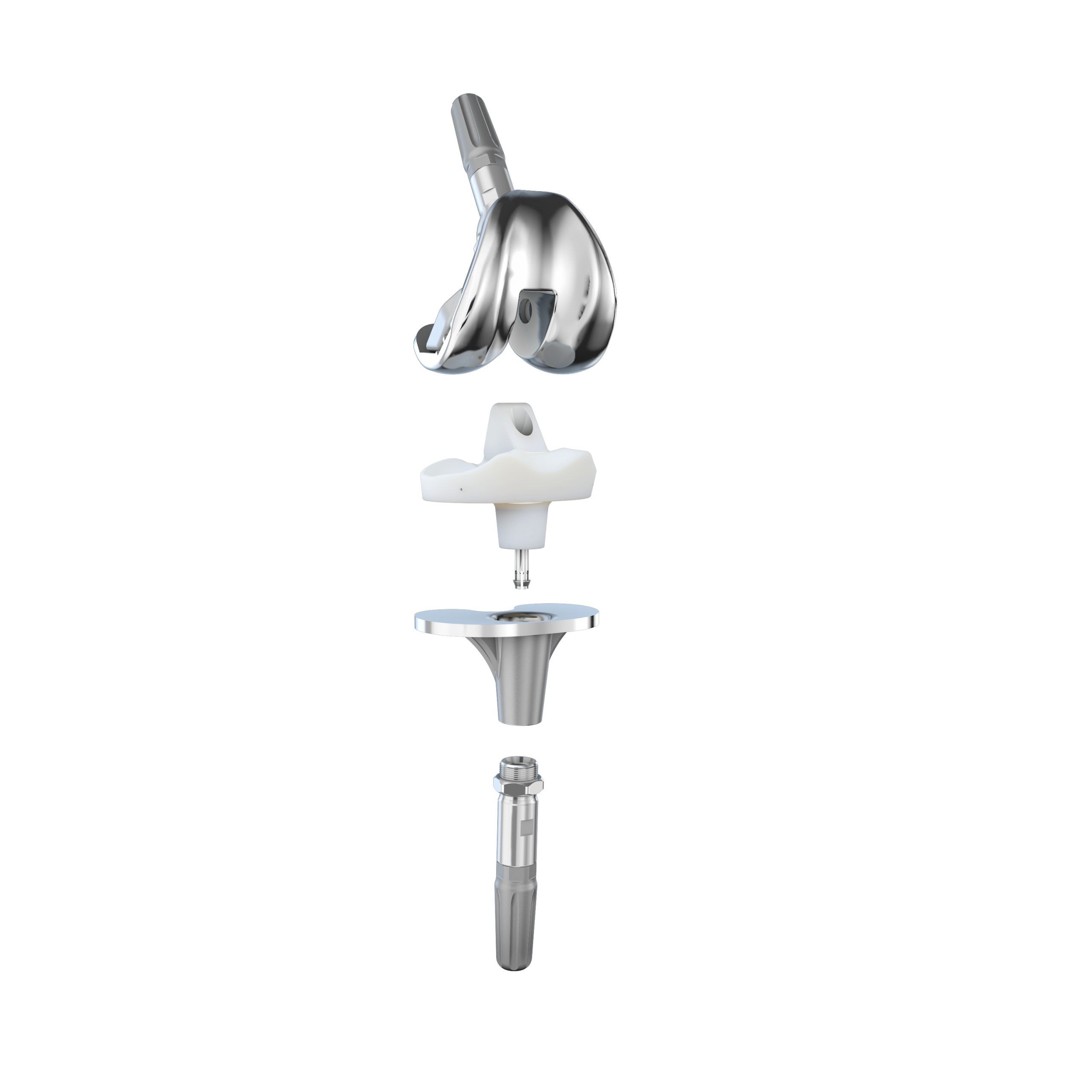
The modular design of the BPK-S Integration System offers the surgeon the option of flexibly adapting the treatment to the patient. The uniform cutting geometry and external contour of the primary and revision implants ensure that primary and revision components can be combined freely to a large extent, thus offering comprehensive treatment options.
If greater stability is required to support insufficient medio-lateral ligament or capsular structures, the primary bone cuts can be easily extended. To do this, simply adjust the implant box into which the Semi-Constrained (SC) or Hinge (RH/TH) mechanism is integrated.
Even an intraoperative switch from the Semi-Constrained (SC) to the Hinge (RH/TH) version is possible without additional bone cuts. At the end of the surgical procedure, it is at the surgeon’s discretion to apply the required individual degree of stabilisation based on their experience.
Intraoperative flexibility, i.e. the ability to adapt to the patient’s individual situation, combined with a precise implantation technique, makes the BPK-S Integration knee system an excellent choice for complex primary or revision procedures.
The added benefit of stability and mobility
The revision system has established itself primarily as a reliable solution for complex primary procedures or major revision surgery involving ligament insufficiency, advanced knee instability or difficult joint positions.
Patients benefit from a return to an active lifestyle and an improved quality of life.
______________________
Material
- Implant components: Co28Cr6Mo
- Cementless stems: Ti6Al4V
- Inserts and patella: UHMW-PE
- Clamping screw: Co28Cr6Mo + titanium nitride coating (TiN)
______________________
Design & Function
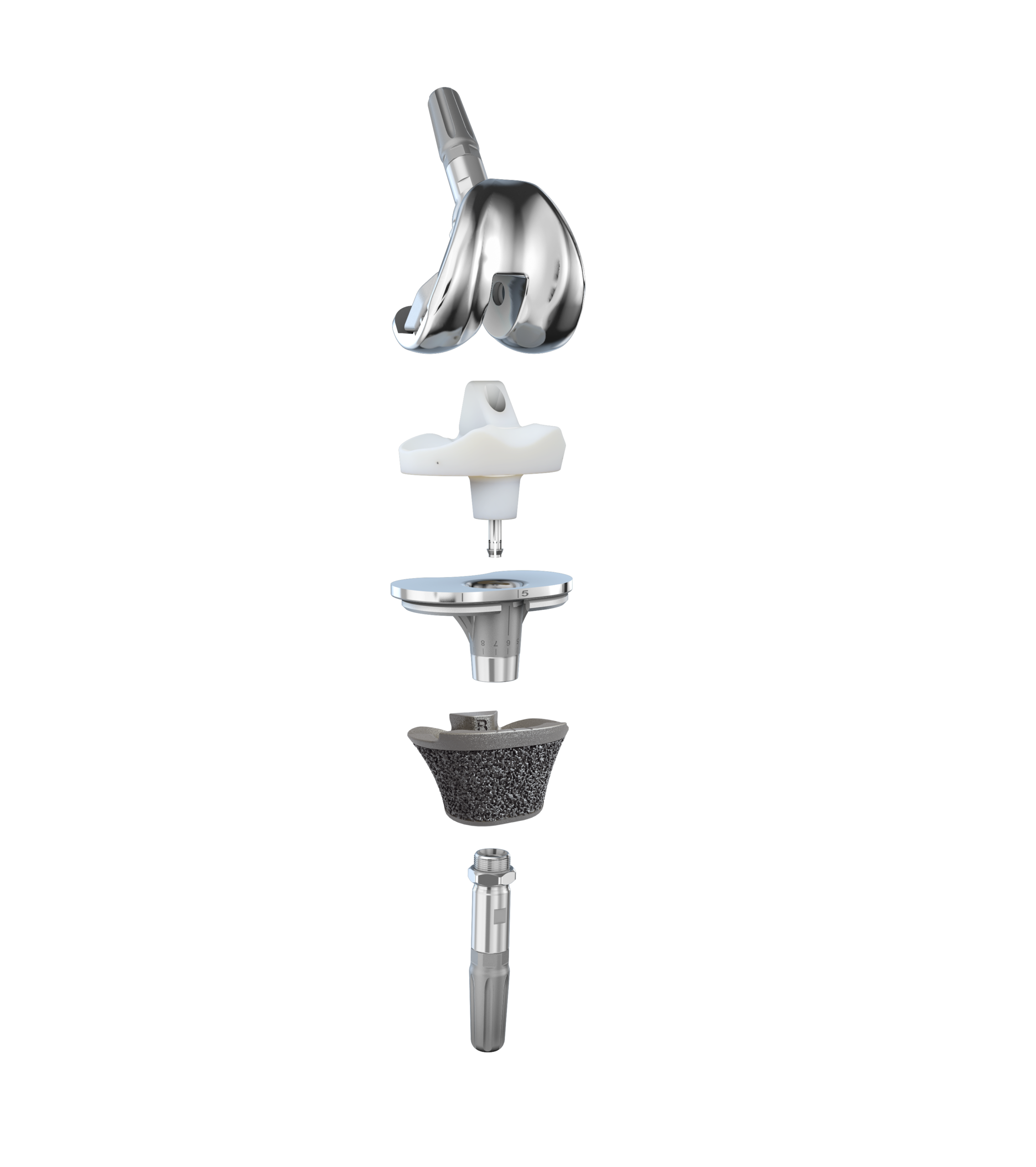
FEMUR Component SC & RH/TH
- 4 femur sizes (SC and RH/TH) with femoral components featuring a 6° valgus angle (connection for ADAPTER femur and straight ANCHORING STEM)
- Distal femoral augments up to 20 mm
- Posterior femoral augments up to 10 mm
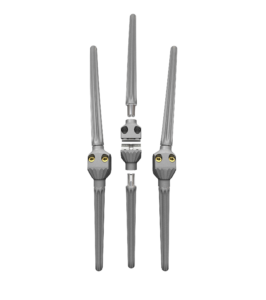
Straight ANCHORING STEM
- Cementless (1 mm increments)
→ Length 40, 80 mm, Ø 13–30 mm
→ Length 140 mm, Ø 13–22 mm
- Cemented (2 mm increments)
→ Length 40, 80, 140 mm, Ø 10–22 mm
- Offset 0, 4 and 6 mm, freely adjustable through 360°
- 3° adapter (tibial slope adaptation; offset 0 mm)
PE insert
- Height in 2 mm increments
→ SC: 7–17 mm
→ RH/TH: 7–25 mm
TIBIA component
- 6 tibia sizes SC (0° tibial slope)
- 4 tibia sizes RH/TH (0° tibial slope)
- ~ 4.5 mm proximal resection
- Tibial augments (CoCr) up to 3 x 5 mm L/R
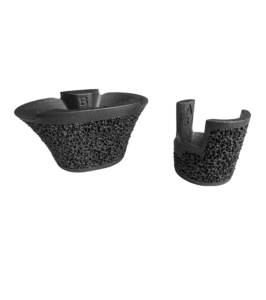
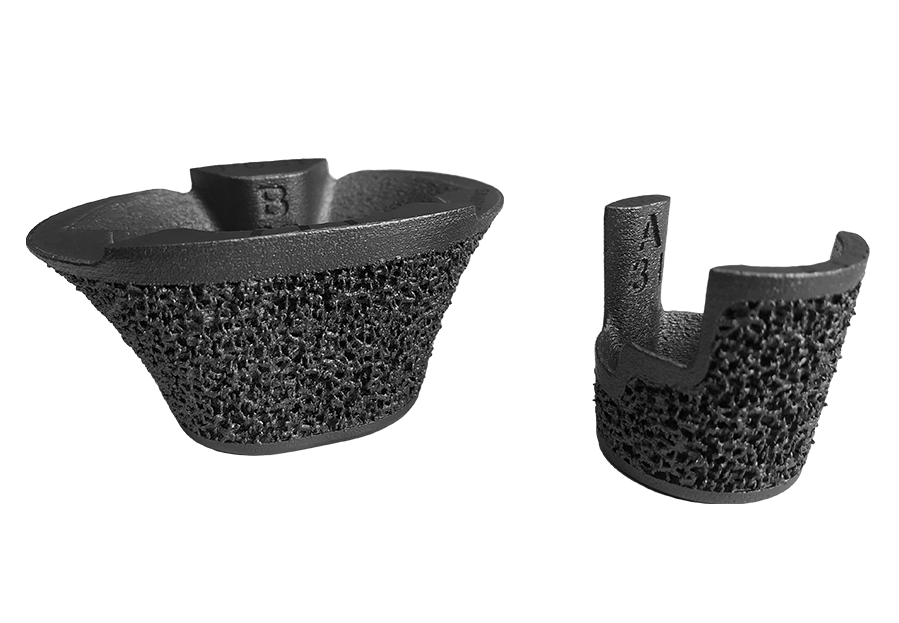
- Tibial metaphyseal cones (Ti6Al4V) 8 sizes
______________________
System overview/
Size combination
Learn more:
______________________
Advantages
- Wide range of tibio-femoral sizes for independent sizing of the femoral and tibial components (4)
- Integrated cross-system compatibility across all stability levels for intraoperative flexibility
- Self-alignment of tibio-femoral rotation combined with high conformity of the bearing pair, joint stability and large contact surfaces through mobile bearing (1–15)
- Stable instrument setup through reference-shaft-based instrumentation

Downloads
Here you will find product information. This includes the instrumentation guide (surgical technique), summaries of scientific articles (executive summaries), and clinical case reports.
BPK-S Integration revision knee system
BPK-S Integration revision knee system
BPK-S Integration revision knee system
BPK-S Integration revision knee system
Cross-over technique (cemented)